
Madeira Wine: from grape to history and where to taste it
Madeira wines are a true testament to the island’s rich history and unique terroir, captivating wine enthusiasts worldwide. With centuries-old production methods, they deliver an unparalleled sensory experience, blending tradition with innovation.
© Foto Blandy's
A wine discovered at sea
The most frequently told story and no less true for that, dates back to the long ocean crossings of the 16th century. Wines from Madeira were fortified with grape spirit to help them withstand weeks or even months at sea. What no one anticipated was that the ship’s motion, controlled oxidation and the tropical heat encountered along the way would result in a wine that was not only more stable, but also deeper, richer and unexpectedly complex. When these wines returned to the island, they revealed toasted aromas, notes of dried fruit, caramel and spice, supported by a striking acidity that kept them remarkably fresh. What might have been considered a flaw became a defining virtue. The distinctive character of Madeira wine was born.
Over time, the process was refined. Fermentation of the must, obtained from pressed grapes, began to be halted at different stages through the addition of grape spirit at around 96% alcohol, determining the final level of sweetness. Ageing would then complete the transformation, slowly, or more rapidly, depending on the desired style.
A History Etched in Time
The story of Madeira wine dates back to the island’s early settlement. During Portugal’s maritime explorations in the 15th and 16th centuries, the addition of grape spirit to the wine, combined with long sea voyages, unveiled its extraordinary depth and complexity. This discovery laid the foundation for Madeira wine’s signature fortified style. By halting fermentation at different stages, winemakers achieved the distinct dry, semi-dry, semi-sweet, and sweet varieties. Aging followed either the traditional “canteiro” method or the heat-accelerated “estufagem” process.
The British played a pivotal role in globalizing Madeira wine, making it a staple at colonial banquets and European courts. Despite setbacks like the 19th-century phylloxera plague, the industry persevered, evolving to produce wines of exceptional quality recognized worldwide.
From canteiro to estufagem: time as an ingredient
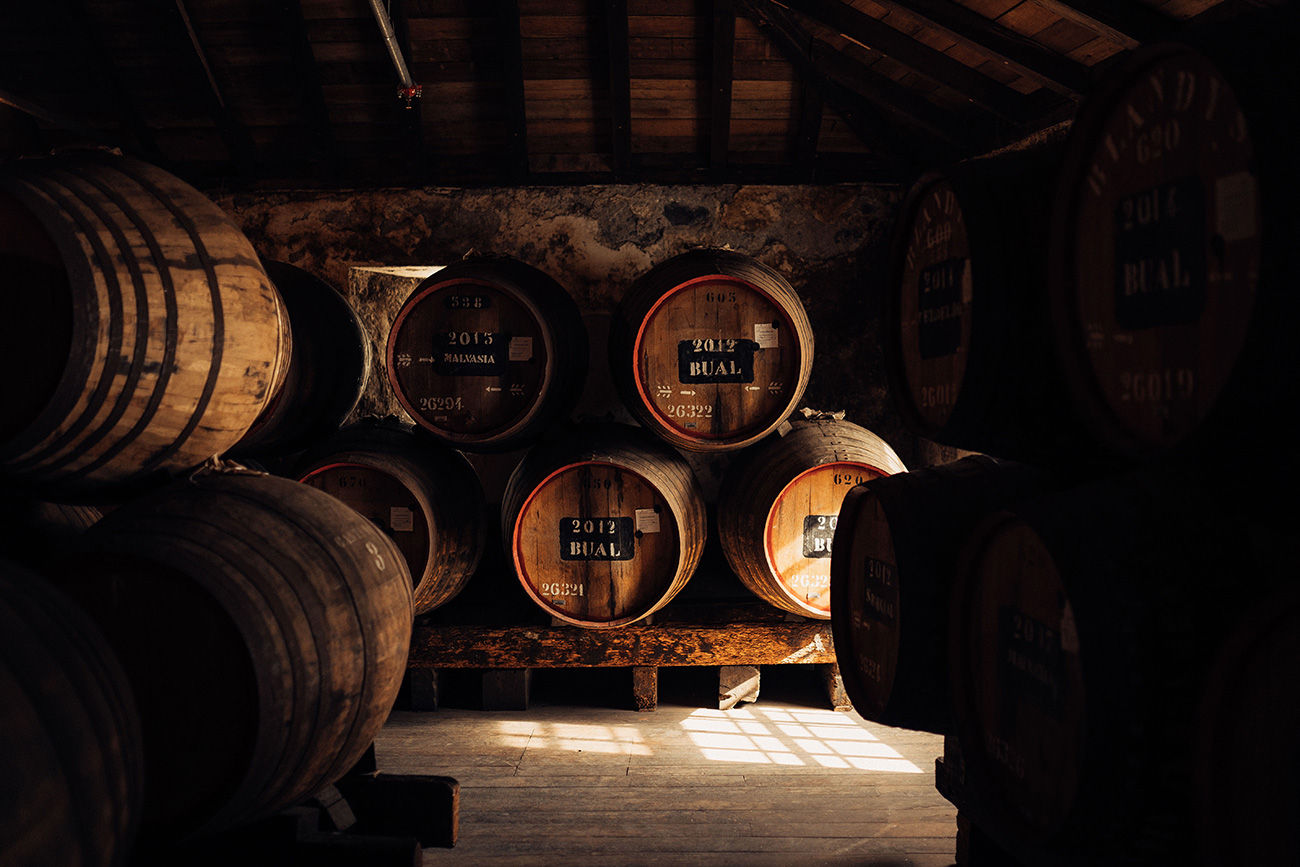
There are two principal ageing methods. The most noble is the canteiro system, in which the wine rests in oak casks, usually on the upper floors of wine lodges, exposed to natural heat for decades. It is a slow, costly and patient process, reserved for the finest, long-lived Madeiras. More commonly used is estufagem, where the wine is gently heated in a controlled environment at temperatures between 30 and 50 degrees Celsius for several months. This accelerates chemical reactions similar to those produced by prolonged ageing, giving the wine its characteristic aromas of walnuts, toffee and coffee. While effective, the greatest Madeiras still depend on real time, not heat alone.
Varieties and Characteristics
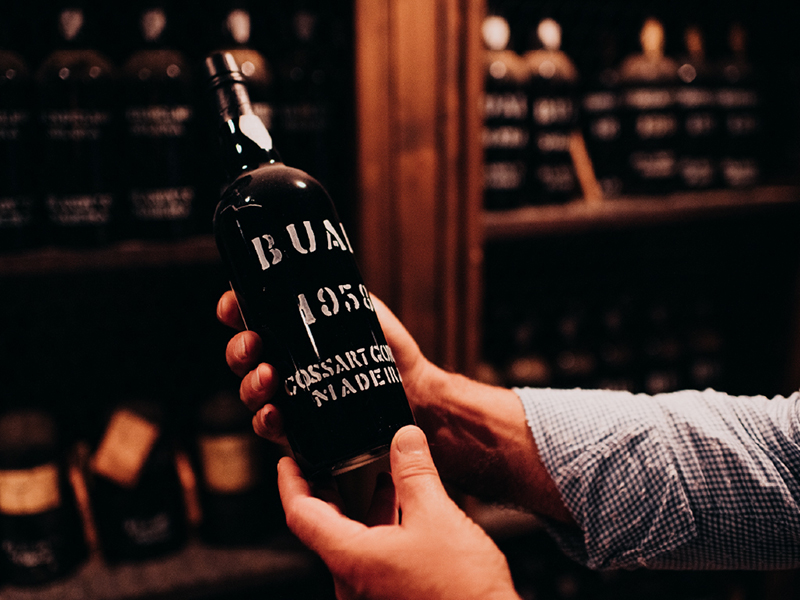
Madeira wines offer a spectrum of flavors, each rooted in unique grape varieties. While Tinta Negra dominates production (80-85%), noble grapes like Sercial, Verdelho, Boal, and Malvasia bring distinct profiles. Sercial delivers crisp, citrusy notes; Verdelho is semi-dry and fruity; Boal offers rich sweetness; and Malvasia indulges with opulent, caramelized flavors. High-quality Madeira wines are aged slowly for decades, developing their iconic nutty, toffee-like complexity.
Cultural Significance and Curiosities
Madeira wine has graced historic occasions, from Winston Churchill’s appreciation of Blandy’s Malmsey 1920 to its role in toasting U.S. independence in 1776. The unique “estufagem” process—heating wine in oak barrels to accelerate aging—creates its hallmark rich, layered taste.
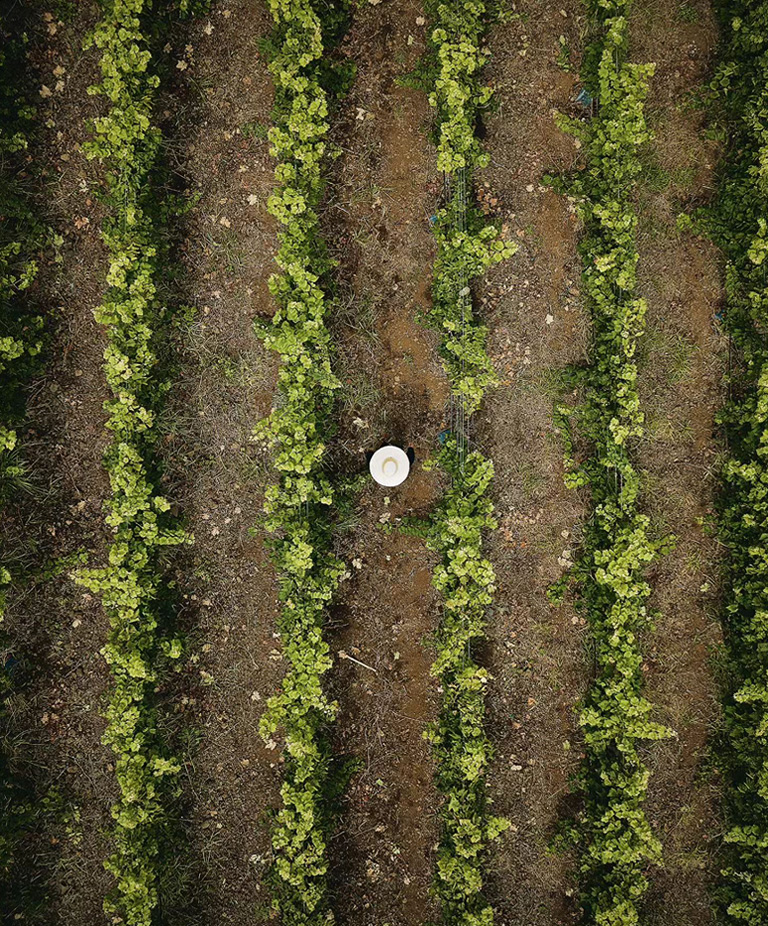
© Foto Blandy's
© Foto Justino's
Economic Importance and Exports
Madeira wine has long been a cornerstone of the island’s economy, accounting for nearly half of its exports a decade ago. Today, over four million liters of this world-renowned wine are produced and exported annually, highlighting its continued significance.
Madeira Wine: How to Serve and Enjoy
Madeira wine is remarkably versatile and can be enjoyed in a variety of ways:
- Serving Temperature: Dry styles like Sercial and Verdelho are best served slightly chilled (12–14°C), while sweeter styles such as Boal and Malvasia are more expressive at warmer temperatures (16–18°C).
- Glassware: Use white wine glasses for dry styles to highlight freshness, and Port or dessert wine glasses for the sweeter varieties to enhance aromas and richness.
- Pairings:
- Sercial: Excellent as an aperitif, pairs well with seafood, salads, and soft cheeses.
- Verdelho: Very versatile; complements fish dishes, poultry, and soft-ripened cheeses.
- Boal: Ideal with aged cheeses, dried fruits, and caramel-based desserts.
- Malvasia: Perfect for rich desserts like chocolate cakes, fruit tarts, or blue cheeses.
A classic that refuses to age
Perhaps the greatest paradox of Madeira wine lies here: it is a wine created to age, yet it never feels old. It resists oxygen, time and changing fashions. It can accompany a meal, a mature cheese, a dessert or simply a moment of quiet reflection.
More than a product, it is a liquid archive of Atlantic history. A wine that tells stories of voyages, empires, crises and resilience. And one that continues, century after century, to prove that some traditions do not need to be reinvented, only understood.
Historic producers and where to taste the best Madeira wine
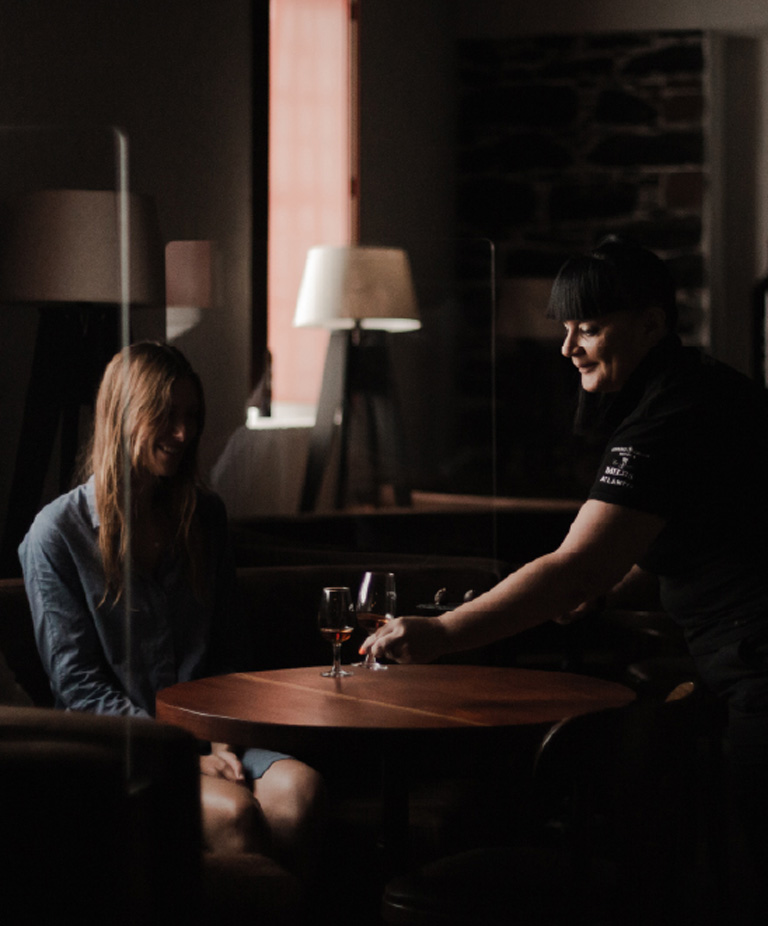
To truly understand Madeira wine, it is essential to visit the houses that have shaped its reputation over decades, producers that preserve consistent styles, rigorous techniques and a depth of knowledge rarely found beyond the island. Beyond the opportunity to purchase carefully selected bottles, several of these houses offer guided tastings and cellar visits, allowing visitors to observe the estufagem and canteiro ageing methods up close and to understand how time acts upon the wine. At the Blandy’s Wine Lodge in Funchal, the experience extends to a museum route that places Madeira wine in historical context and highlights the role this house played in Atlantic trade. These are essential stops for tasting different styles, grasping their nuances and choosing with discernment whether selecting a bottle to enjoy now or one intended to age gracefully for many years.
Essential Madeira Wineries
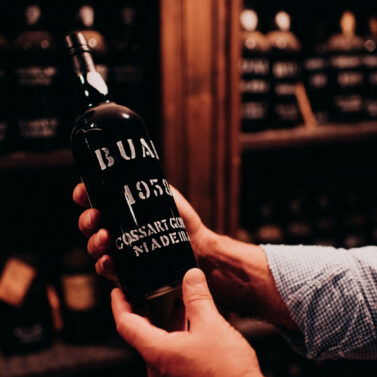
Blandy’s
Founded in 1811, Blandy’s stands as one of Madeira’s oldest and most prestigious producers. Renowned for its meticulous aging methods and exceptional wines, this historic house showcases the island’s unique terroir in every bottle. See more
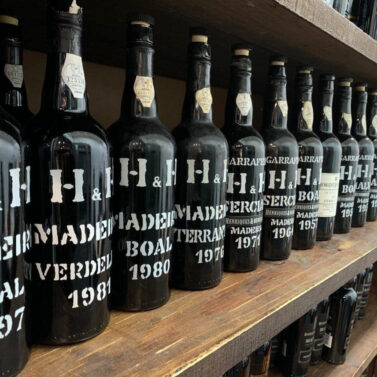
Henriques & Henriques
Established in 1850, Henriques & Henriques brings over 170 years of expertise to Madeira winemaking. With estate-grown grapes and unwavering dedication to tradition, their wines exemplify excellence. See more
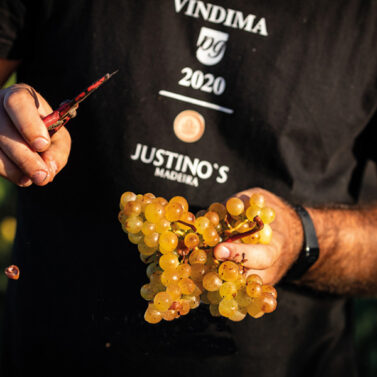
Justino’s
Since 1870, Justino’s has mastered the art of Madeira wine, offering a diverse range from dry to sweet. With continuous innovation and a focus on quality, Justino’s remains a leading name in the industry. See more
Explore the Essence of Madeira Wine
Madeira wine is more than a drink—it’s a journey through history, craftsmanship, and flavor. Whether sipping it as an aperitif, pairing it with a meal, or discovering its role in global traditions, Madeira wine promises an unforgettable experience.