
The brutal beauty of Madeira
By Álvaro Reis
This is not the postcard version of Madeira. It is an island in its raw state, cliffs dropping sharply into the Atlantic, exposed black rock, mountains carved by wind and water. The landscape is hard, irregular, at times inhospitable. Beauty here is not soft, nor immediately legible. It is intense, almost confrontational. It emerges through contrast, through scale, through force. A brutal kind of beauty without concessions, impossible to ignore. And it is precisely this intensity that sets Madeira apart from easier destinations, from places designed to please at first glance.
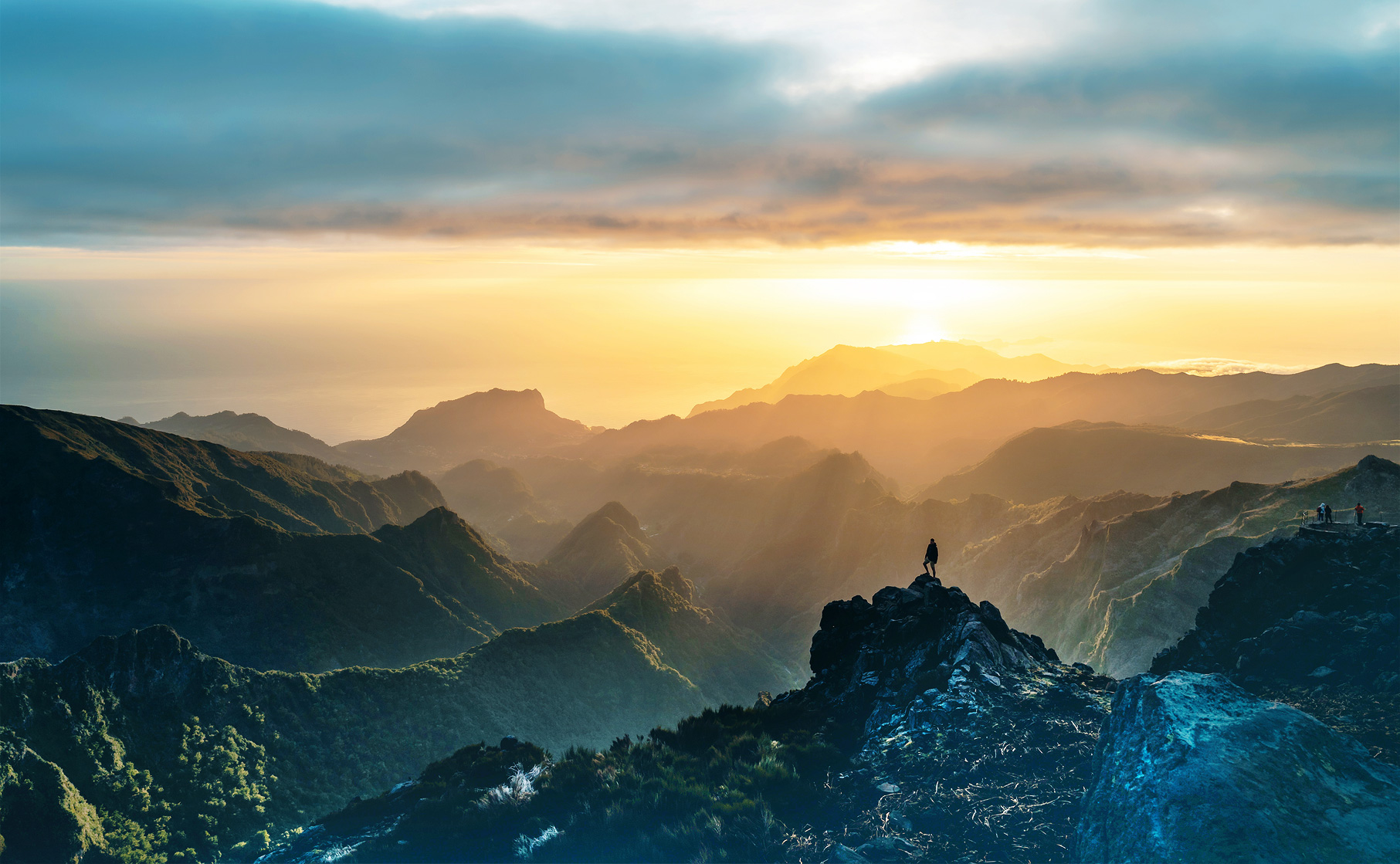
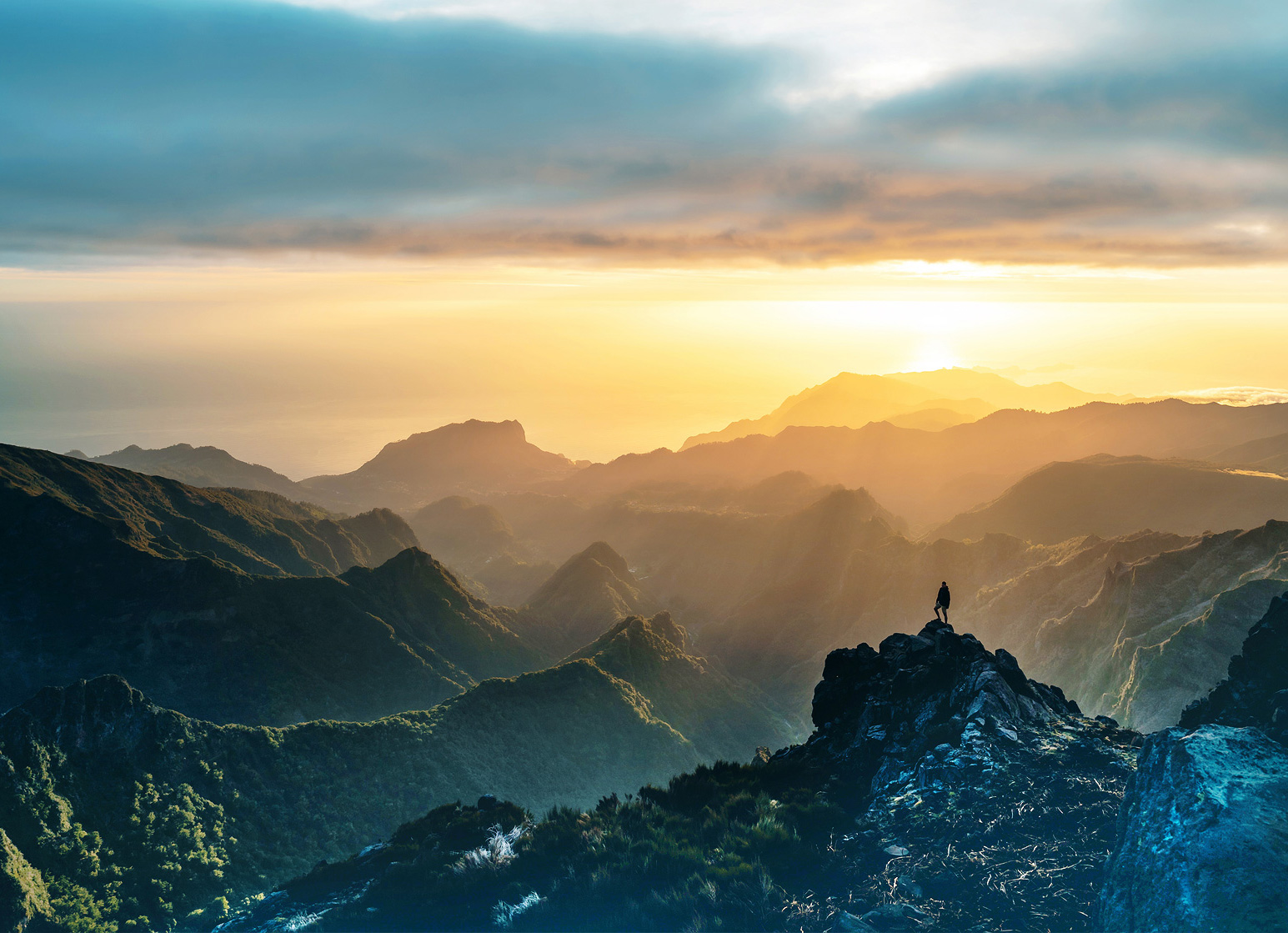
Pico do Areeiro
There is a Madeira off the beaten track, more unspoilt, more isolated, and one that takes time to discover.
Geology, vertigo and a layered island
Madeira is today one of the world’s most recognised island destinations, awarded, promoted and increasingly visited. In recent years, the focus has shifted towards overtourism, towards a landscape becoming increasingly visible, increasingly accessible.
But this piece is not about that Madeira.
Not about natural pools with easy access, viewpoints with parking or neatly signposted trails. Not about the curated version of the island that can be consumed quickly.
This is about another layer, deeper, more demanding, less immediate.
There is a Madeira that begins where the easier paths end. A quieter, more isolated territory that requires time and often hours of walking — to reveal hidden levadas, dense forests and slopes where access has never been simplified.
And it is here that the island’s most compelling form of beauty emerges.
Not obvious, not decorative, but shaped by resistance: cliffs plunging into the ocean, black sand shores, dense vegetation and mist that settles over the peaks, suspending the landscape in something close to melancholy.
There is a certain nostalgia to it as if the island belonged to another time.
How can such harsh terrain hold so much beauty?
The answer lies in intensity. In the way Madeira presents its geography without compromise sharp, irregular, sometimes severe, yet deeply compelling.
For those willing to accept the effort, the isolation, the unpredictability, the reward is rare.
There is something almost secret about it.
Not because it is hidden, but because it is not immediate.
To understand it, you have to go back millions of years.
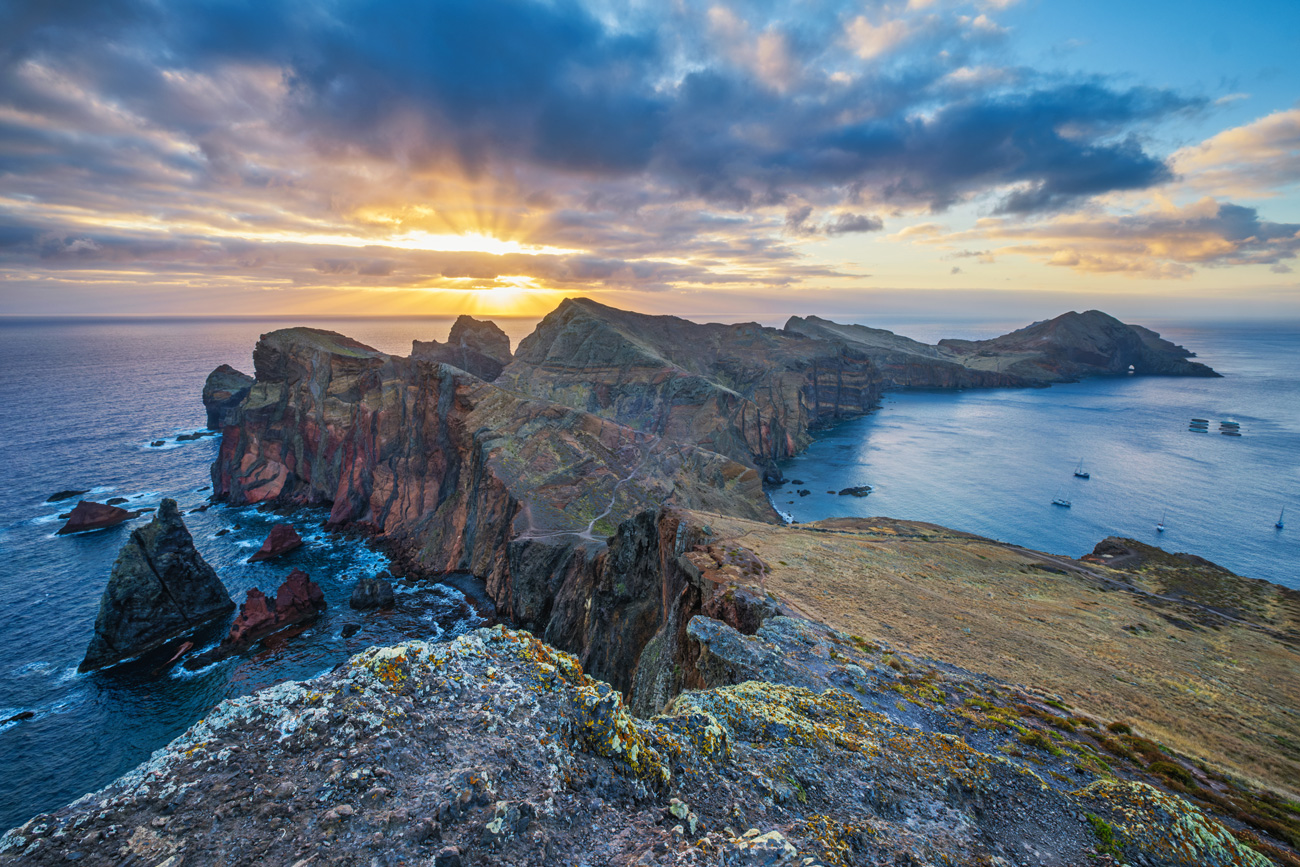
Ponta de São Lourenço, © Dmitry Rukhlenko
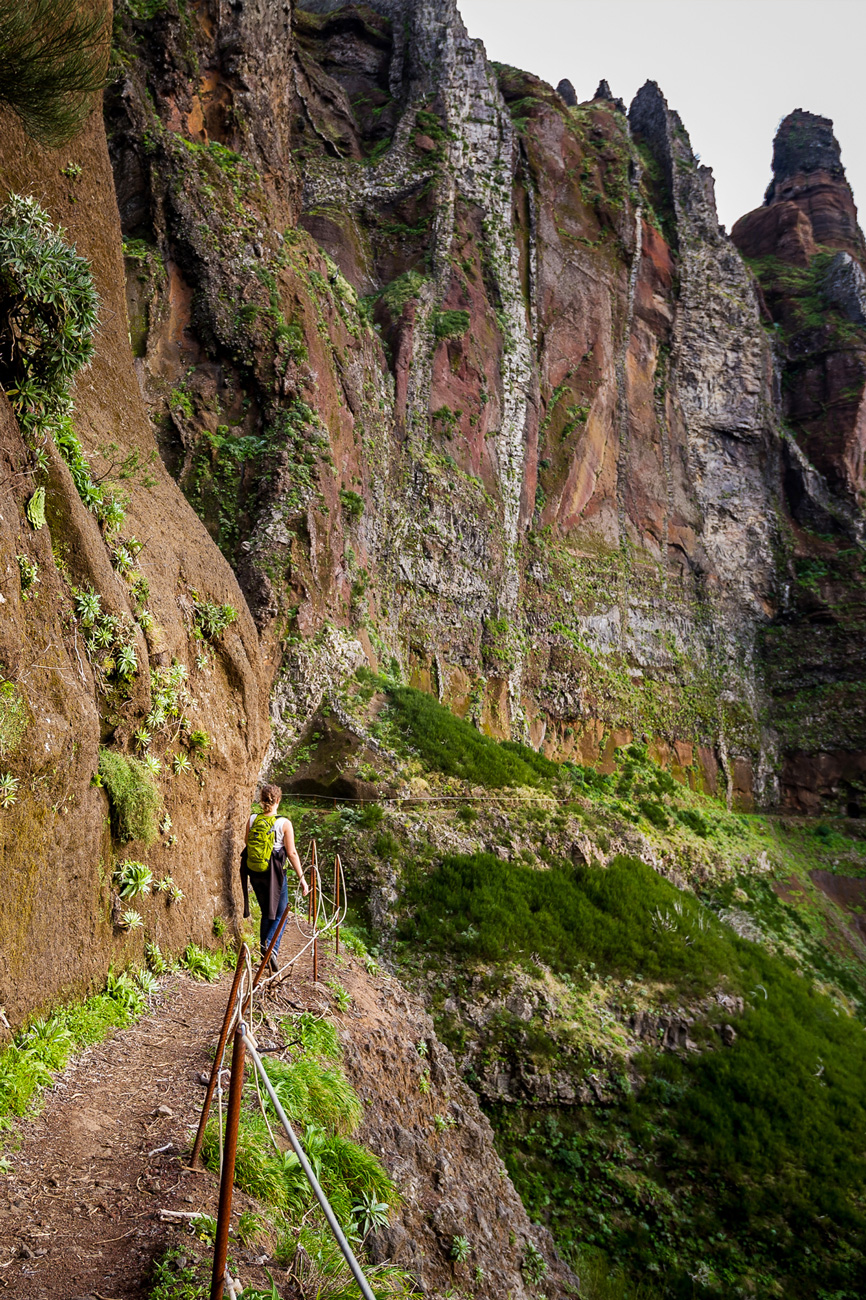
Vereda do Areeiro
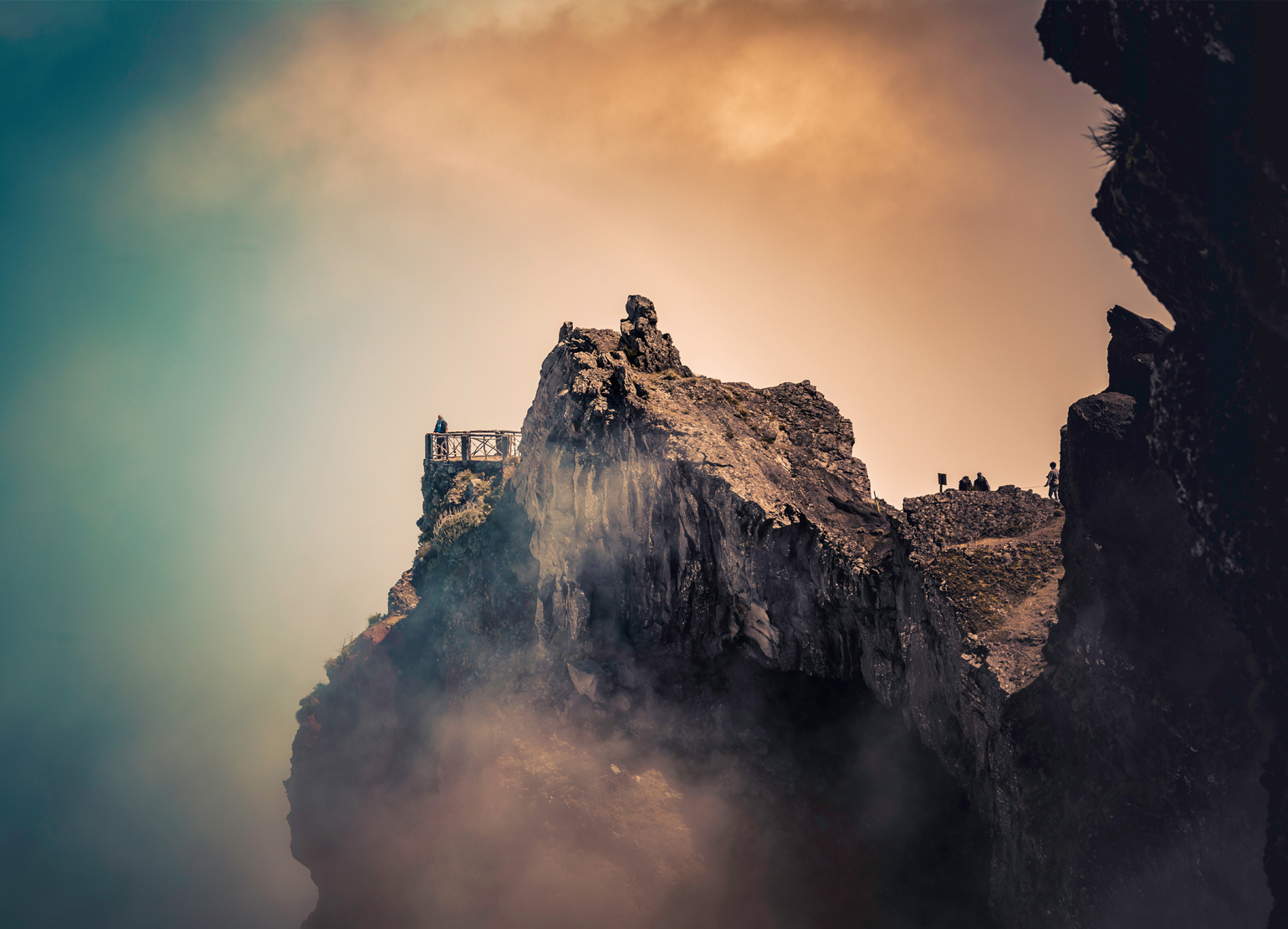
Pico do Areeiro, © Chris WM Willemsen
A fragmented, rugged and challenging landscape.
An island shaped from below
Madeira rose from the ocean floor.
Around five million years ago, magma began to push through a weakness in the Earth’s crust. Not in a single eruption, but through repeated volcanic events that gradually built layers of basalt, forming a structure large enough to break the surface.
What we see today is only the visible summit of a much larger volcanic system, a mountain rising several kilometres from the depths of the Atlantic.
Erosion came later and defined everything.
Rain carved deep valleys, the ocean opened sheer cliffs, and the wind exposed layers of rock. The result is a fragmented geography, where movement is never linear, where every journey involves descent and ascent.
Black basalt dominates, interrupted by iron tones and an almost excessive green. A constant tension between austerity and abundance.
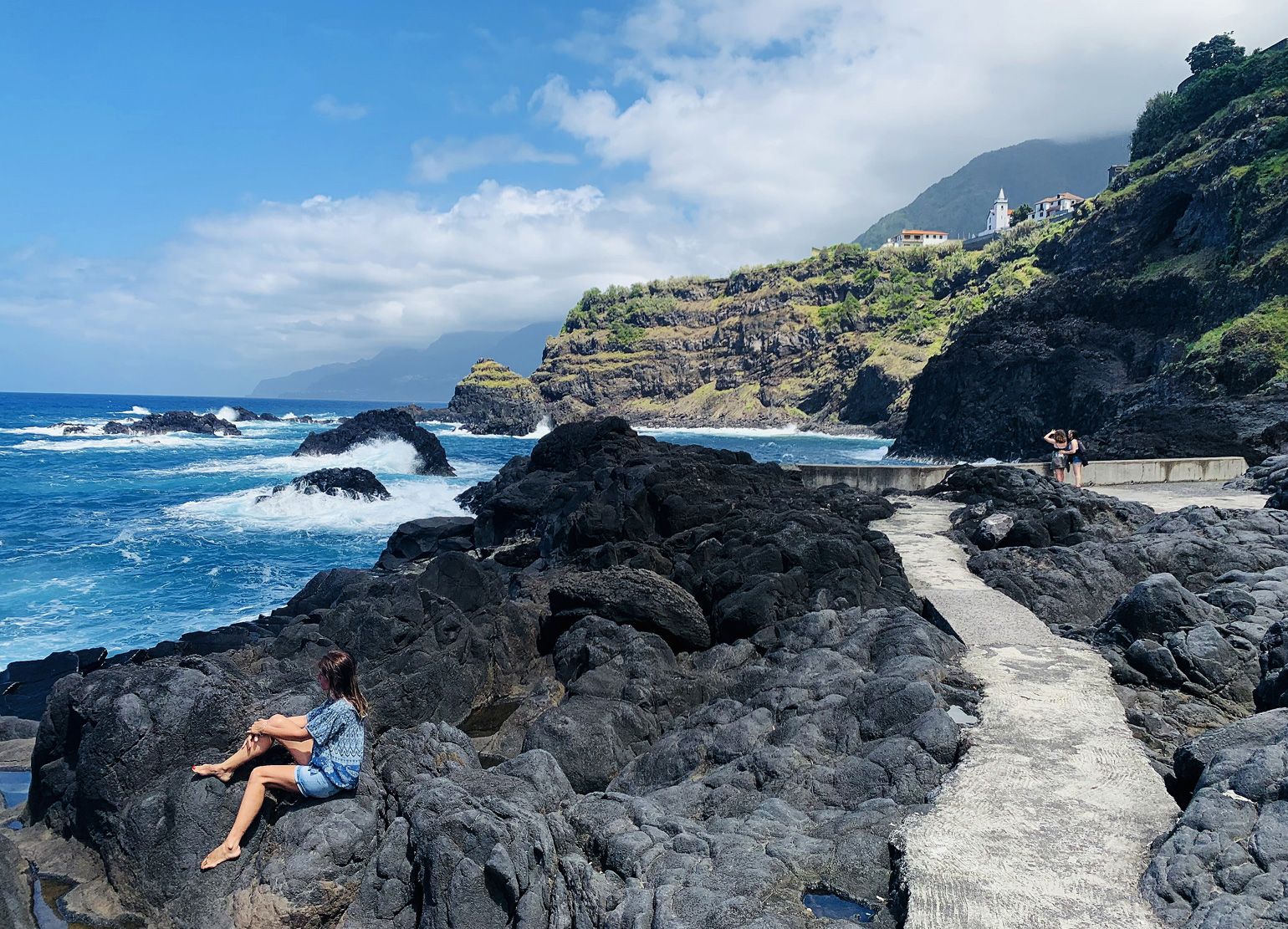
Seixal
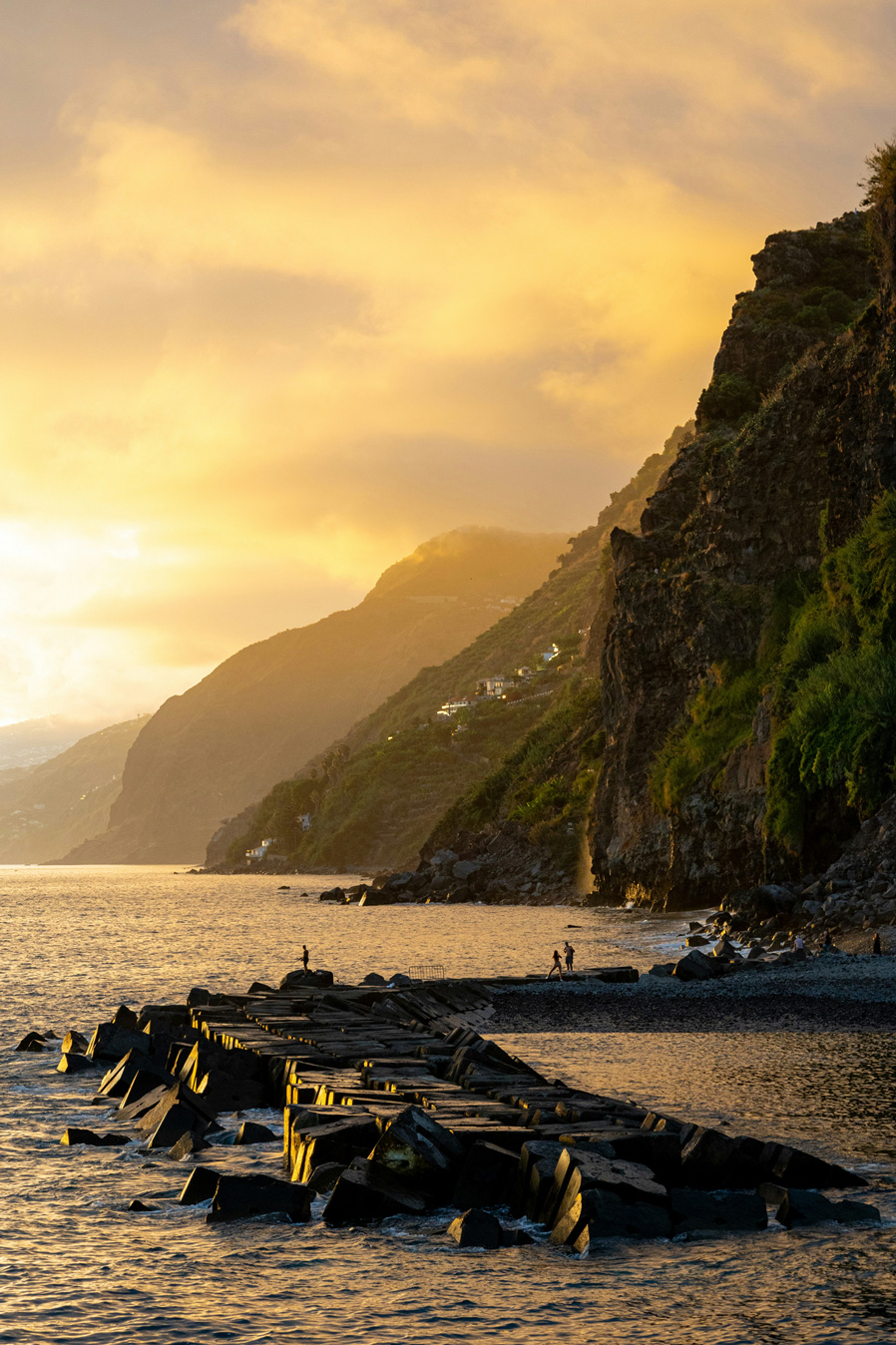
Ponta do Sol, © Mick Kirchman
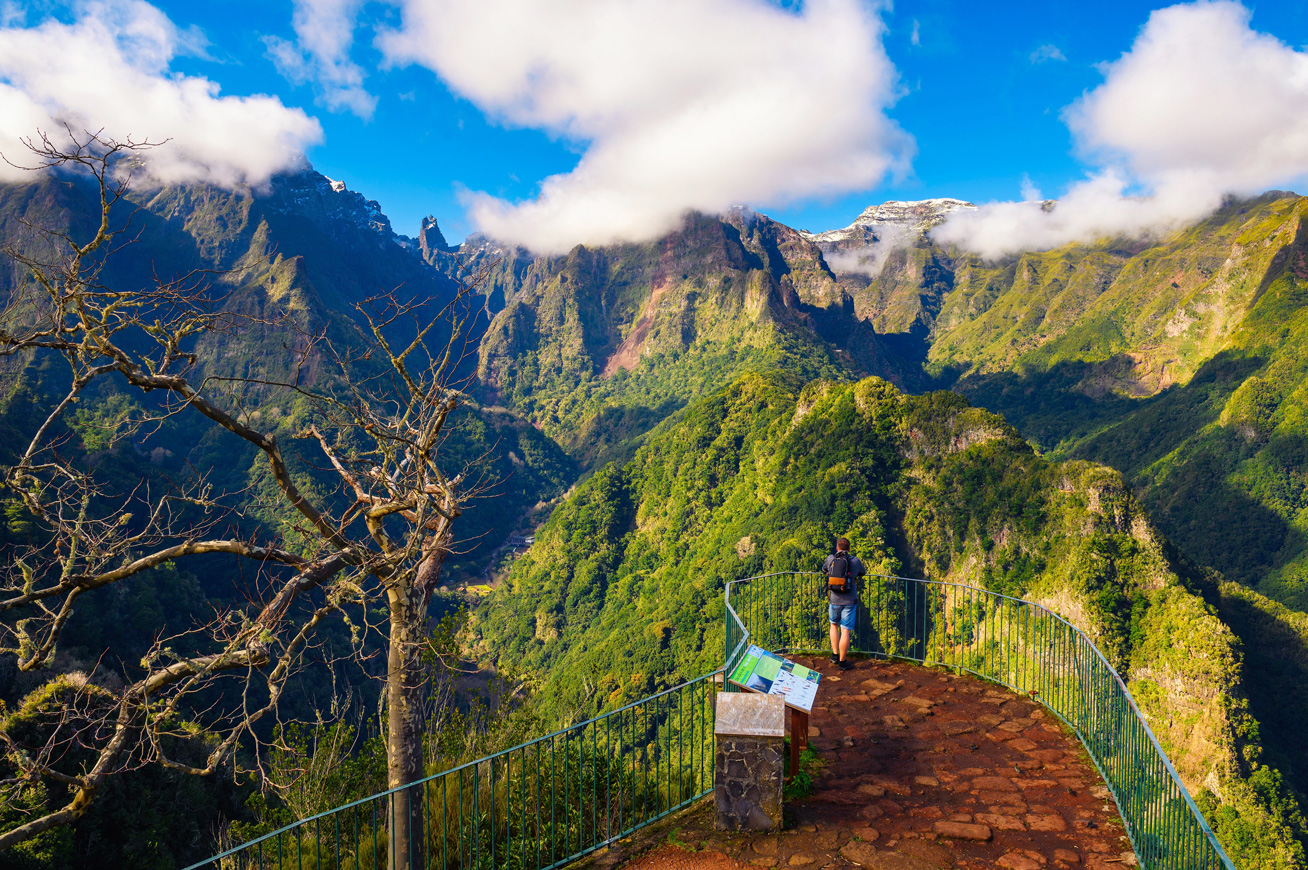
Balcões Viewpoint, © Nick Fox
The Laurissilva is not a planted forest; it is an ancient, self-regulating ecosystem in which everything is interconnected.
Laurissilva: a forest out of time
Long before Madeira existed as an island, much of Europe was covered in forests similar to the Laurissilva.
Glaciations erased them from the continent. Here, isolated in the Atlantic and protected by a stable climate, they survived.
The Laurissilva is not planted woodland, it is an ancient, self-regulating ecosystem shaped over millions of years. Trees, moss, lichen and airborne moisture form a continuous system, sustained by a largely invisible phenomenon: horizontal precipitation. Moisture carried by trade winds condenses on leaves, feeding the forest from the air itself.
At Fanal, this becomes tangible.
Altitude, wind exposure and constant humidity have shaped trees into sculptural forms, twisted, slow-growing, resistant. Visibility shifts with the fog, sound is absorbed, and time seems to loosen.
Walking through Fanal in mist is a fully sensory experience, an immersion in a landscape that no longer exists elsewhere in Europe. It is less about moving through space, and more about inhabiting it.
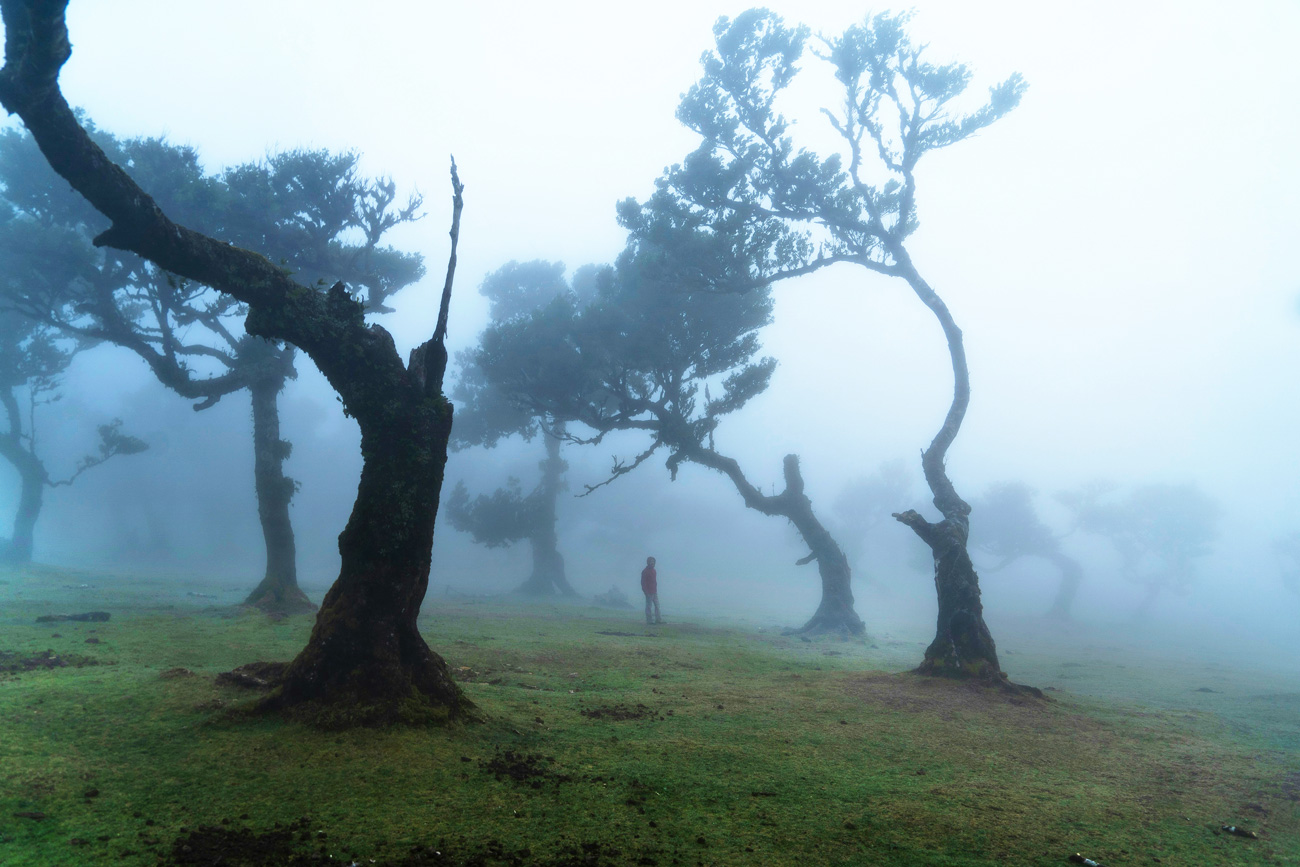
Fanal, © Hikerwise
The secret lies in going further, choosing more challenging routes that aren’t the quickest option.
Levadas: lines of persistence
Levadas are often described as trails, a simplification.
They are hydraulic infrastructures, built from the 16th century onwards, designed to channel water from the humid north and interior towards agricultural land. Their construction required cutting into mountains, suspending channels across cliffs and digging tunnels through solid rock.
Today, they are among Madeira’s most popular activities. During peak months, access to some routes is controlled, with reservations required and visitor numbers limited.
For good reason. Crowded levadas alter the experience entirely. The forest loses its silence, the rhythm changes, and the sense of isolation fades.
The solution is simple: go further.
Longer, more demanding routes naturally filter those who reach them, restoring the island to something closer to its original state.
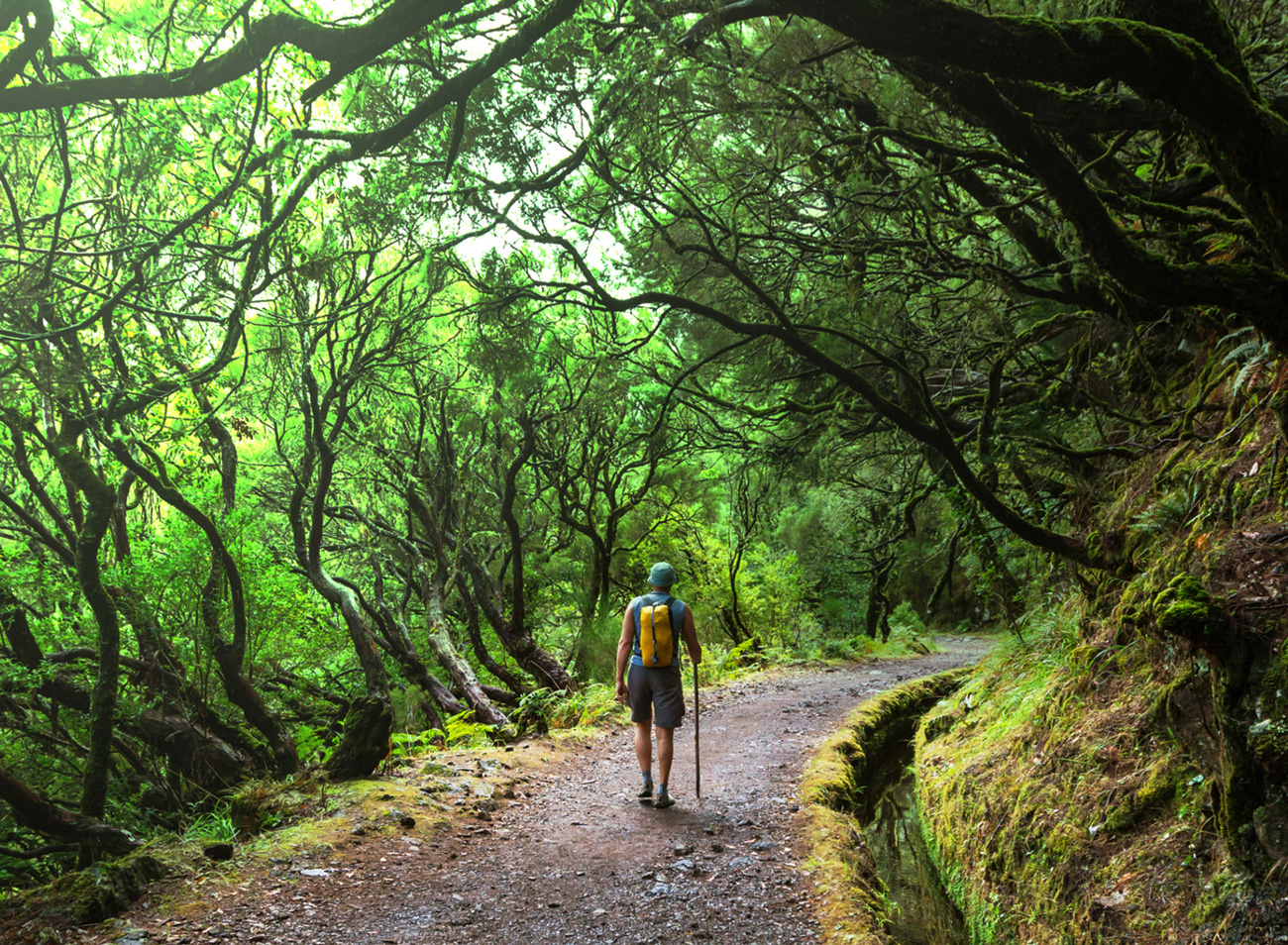
Laurissilva Forest
Here, the logic is clear: the harder the route, the closer you get to Madeira’s essence.
It’s not just about walking; it’s about reaching places few others do and discovering an island that still stands its ground.
Routes for those seeking the edge
Pico do Areeiro – Pico Ruivo – Achada do Teixeira
Distance: ~10 km
Duration: 6 to 8 hours
Exposed, physically demanding, with steep elevation changes.
Levada do Caldeirão Verde + Caldeirão do Inferno (full route)
Distance: ~18 km (round trip)
Duration: 7 to 9 hours
Long tunnels, constant humidity, progressively more enclosed terrain.
Encumeada – Pico Ruivo (full crossing)
Distance: ~12 km
Duration: 7 to 8 hours
Less frequented, physically intense, with real isolation.
Levada da Fajã do Rodrigues
Distance: ~8 km
Duration: 4 hours
Technical sections, long tunnels, requires preparation.
Levada do Rei (to Ribeiro Bonito)
Distance: ~10 km
Duration: 4 to 5 hours
More immersive than difficult, but long enough to avoid the crowds.
Levada do Norte (remote sections)
Variable distance (up to 20 km possible)
Duration: 8+ hours
One of the island’s longest with isolated stretches far from crowds.
(For a comprehensive guide, see also the article “The best levada and vereda trails in Madeira”)
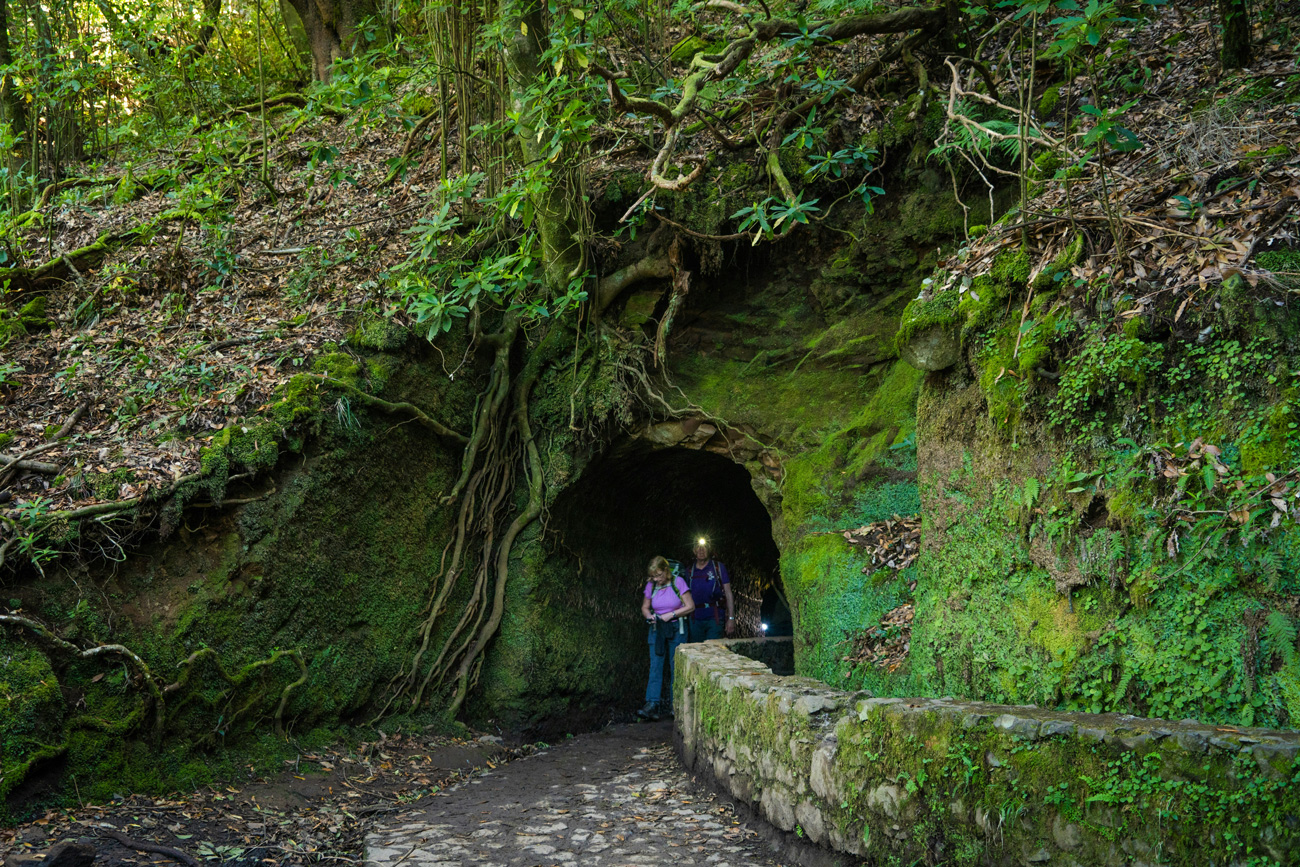
Levada do Caldeirão Verde © Hikerwise
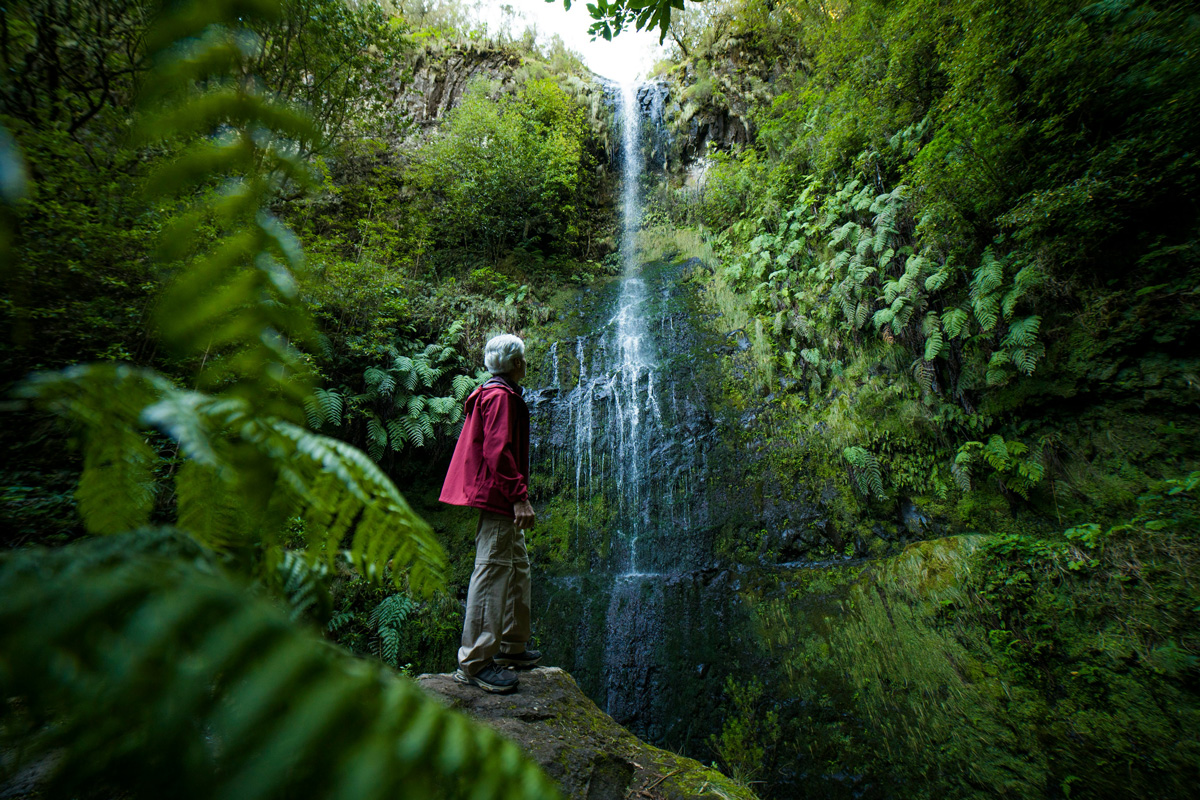
Levada do Caldeirão Verde © Hikerwise
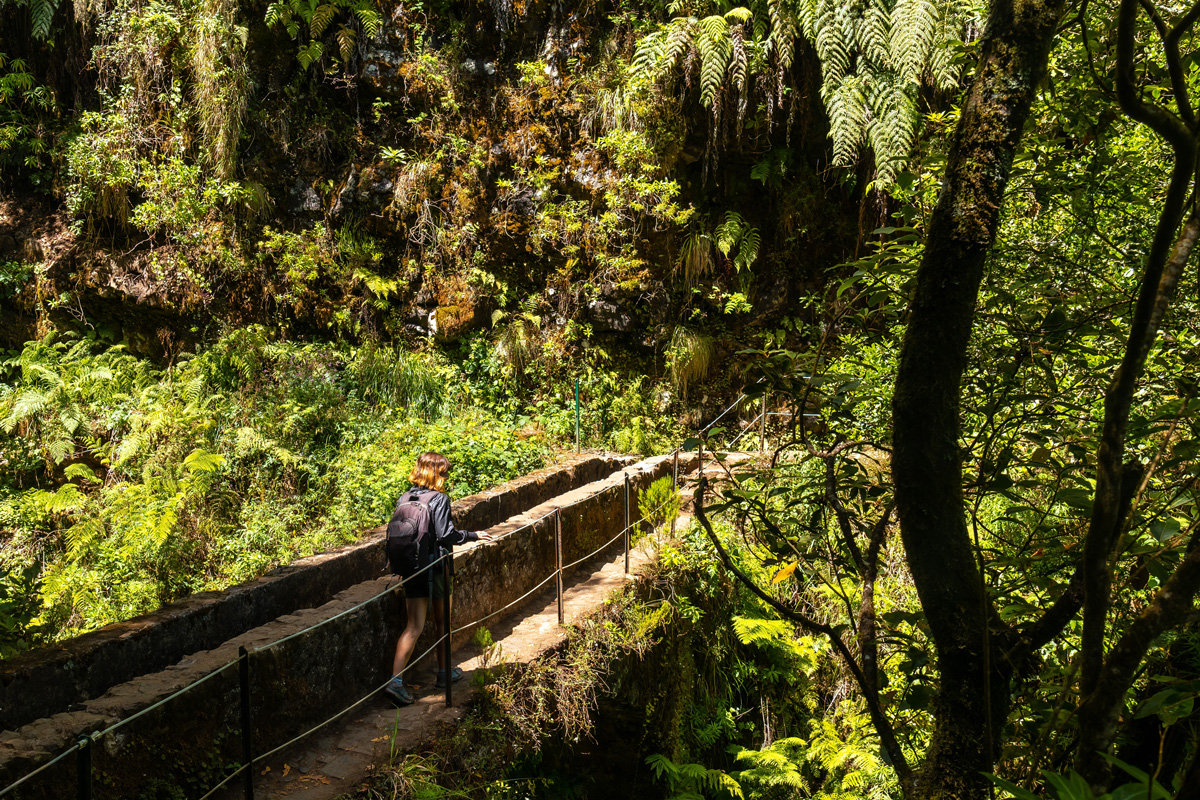
Levada do Caldeirão Verde © Unai Huizi
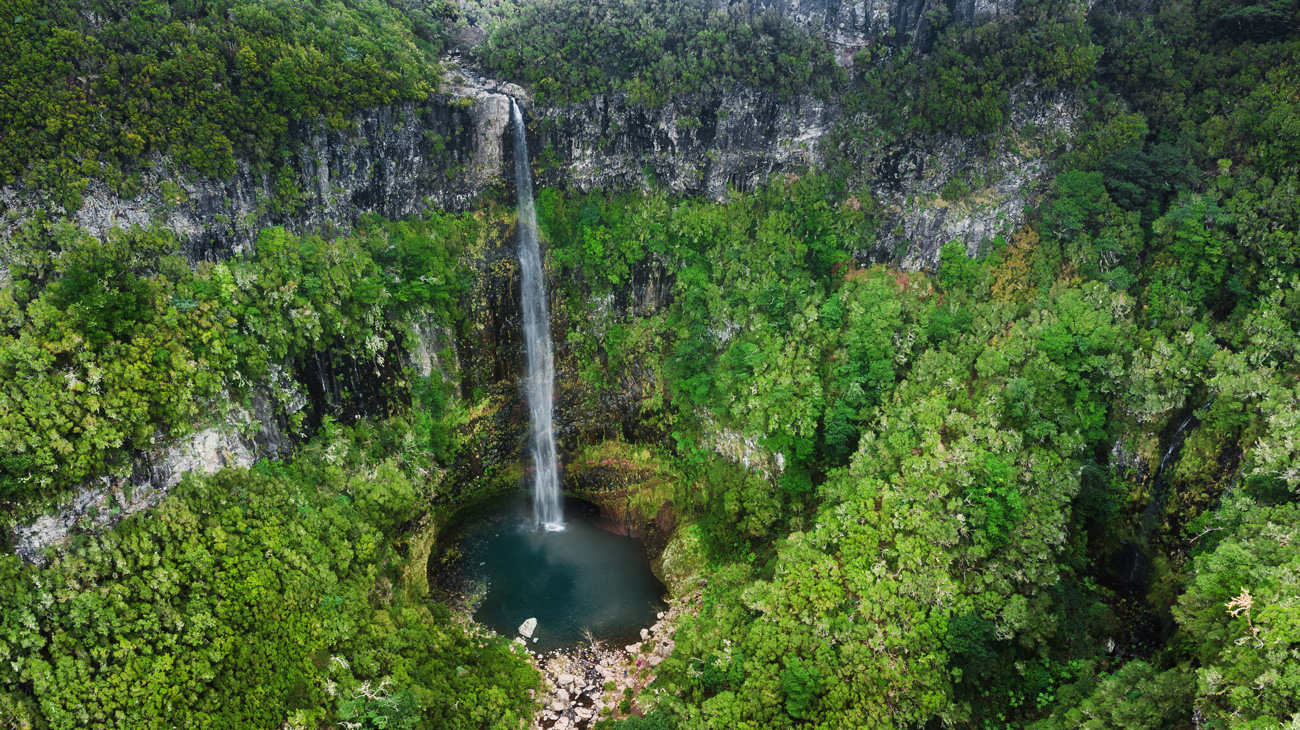
Risco Waterfall, Levada do Risco
Waterfalls are a continuous cycle involving rock, water and vegetation.
Water in motion
Water rarely rests here.
It cuts through rock, feeds the levadas, disappears and re-emerges. Cascades are not fixed landmarks but part of a continuous system.
At Caldeirão Verde, the path leads through tunnels before opening onto a vertical wall of moss, where water falls in a steady, resonant stream.
At Lagoa do Vento, the approach is more demanding, the final reward a waterfall dropping into a closed valley, dense and contained.
Risco impresses by scale, a vertical line across the Rabaçal landscape.
At 25 Fontes, water fragments into multiple streams, shaped by the terrain.
Elsewhere, waterfalls appear only after heavy rain, then vanish again.
Water here does not settle. It moves and reshapes the island.
In Madeira, water never stays still. It is constantly in motion, reshaping the landscape.
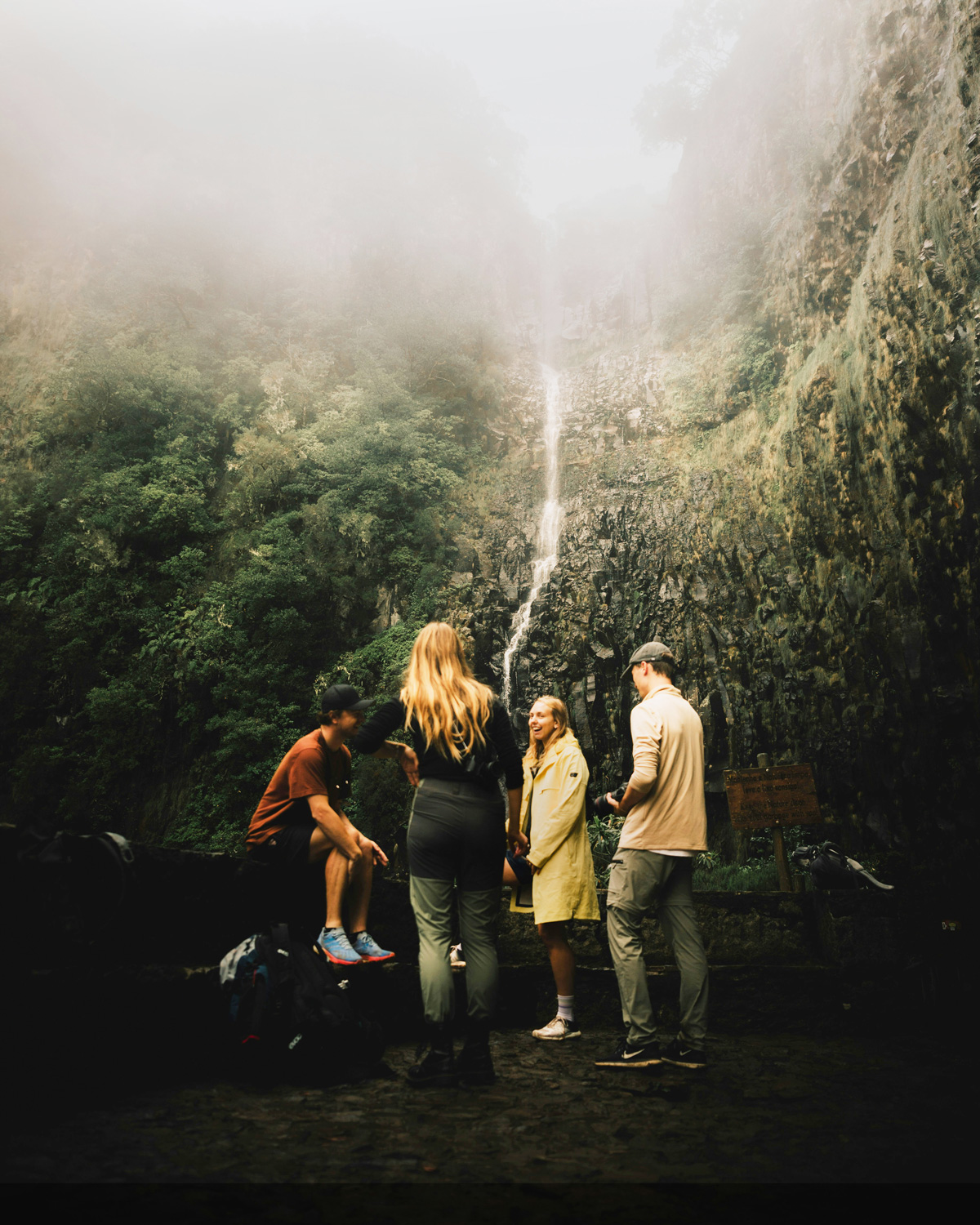
Risco Waterfall, Rabaçal, © Daniel J. Schwarz
Selvagens and Desertas: the outer edge of isolation
Madeira’s true frontier does not end with the main island.
To the south lie two distinct archipelagos, the Desertas Islands (Deserted Islands), closer to Madeira, and, much further out, the Selvagens Islands (Savage Islands), over 250 km away. Both volcanic in origin, dry and exposed, they were never permanently settled. The absence of fresh water and their isolation have kept them largely intact.
The Desertas, although access is controlled, can be visited under regulated conditions, with a permanent monitoring presence and limited tourism activity. The Selvagens exist at another level of isolation, more distant, more inaccessible, closer to their original state.
Both archipelagos are protected nature reserves, home to significant seabird colonies and among the Atlantic’s last truly preserved territories.
Access is always restricted, organised through authorised expeditions and dependent on sea conditions.
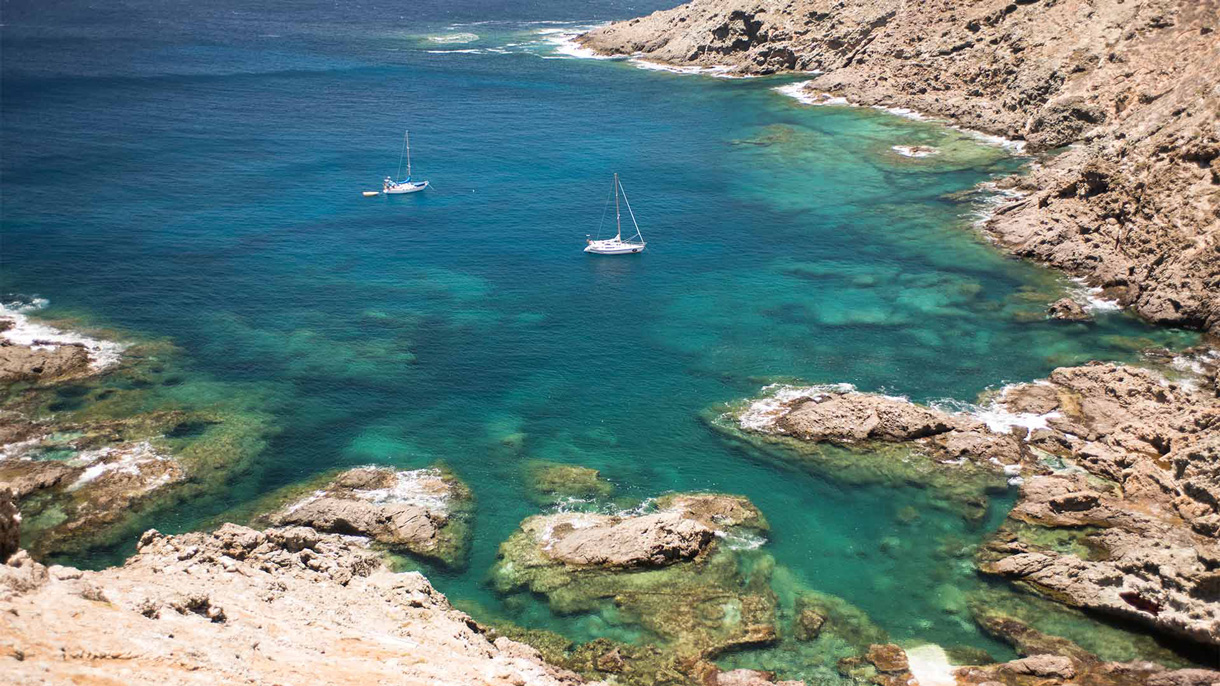
Selvagens Islands, © Tiago Machado
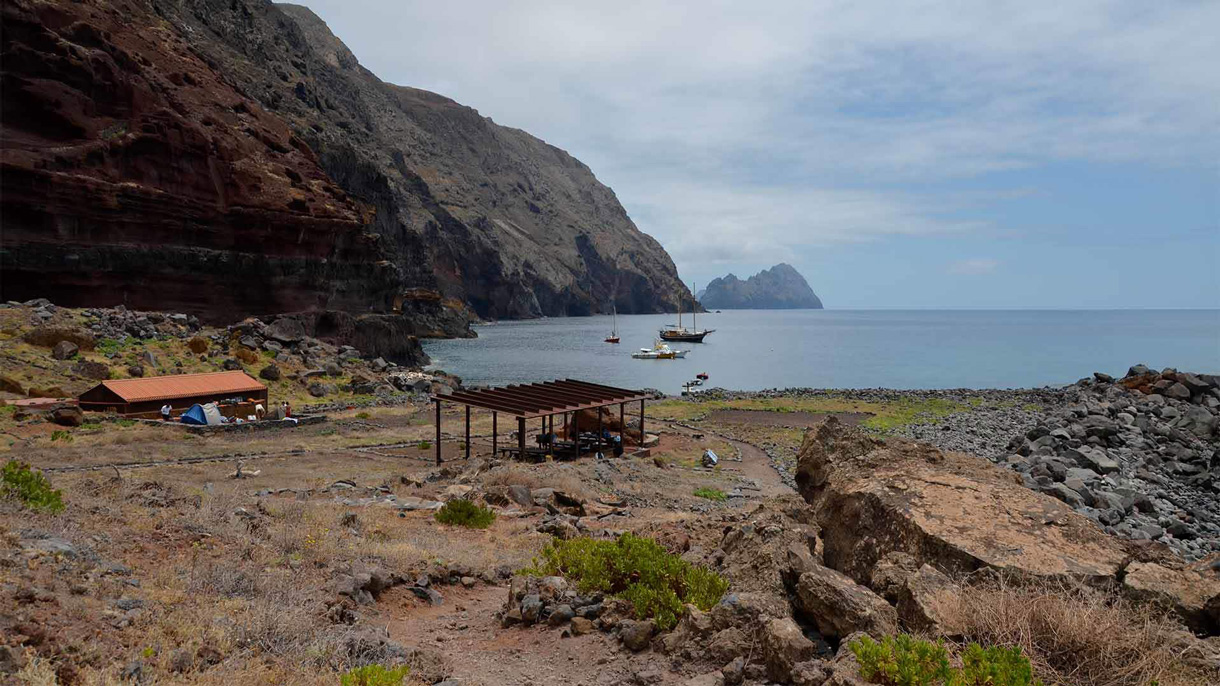
Desertas Islands, © Francisco Correia
No permanent population.
No urbanisation.
Only a lighthouse, a minimal human presence and a landscape that remains largely untouched.
Here, silence is absolute. The scale of isolation becomes tangible.
Nature in its purest form, and perhaps the closest expression of what Madeira once was, before it became visible.
(To find out how and with whom to visit these islands, see the “Things to Do in Madeira” article on Find Portugal.)
Here, silence is absolute.
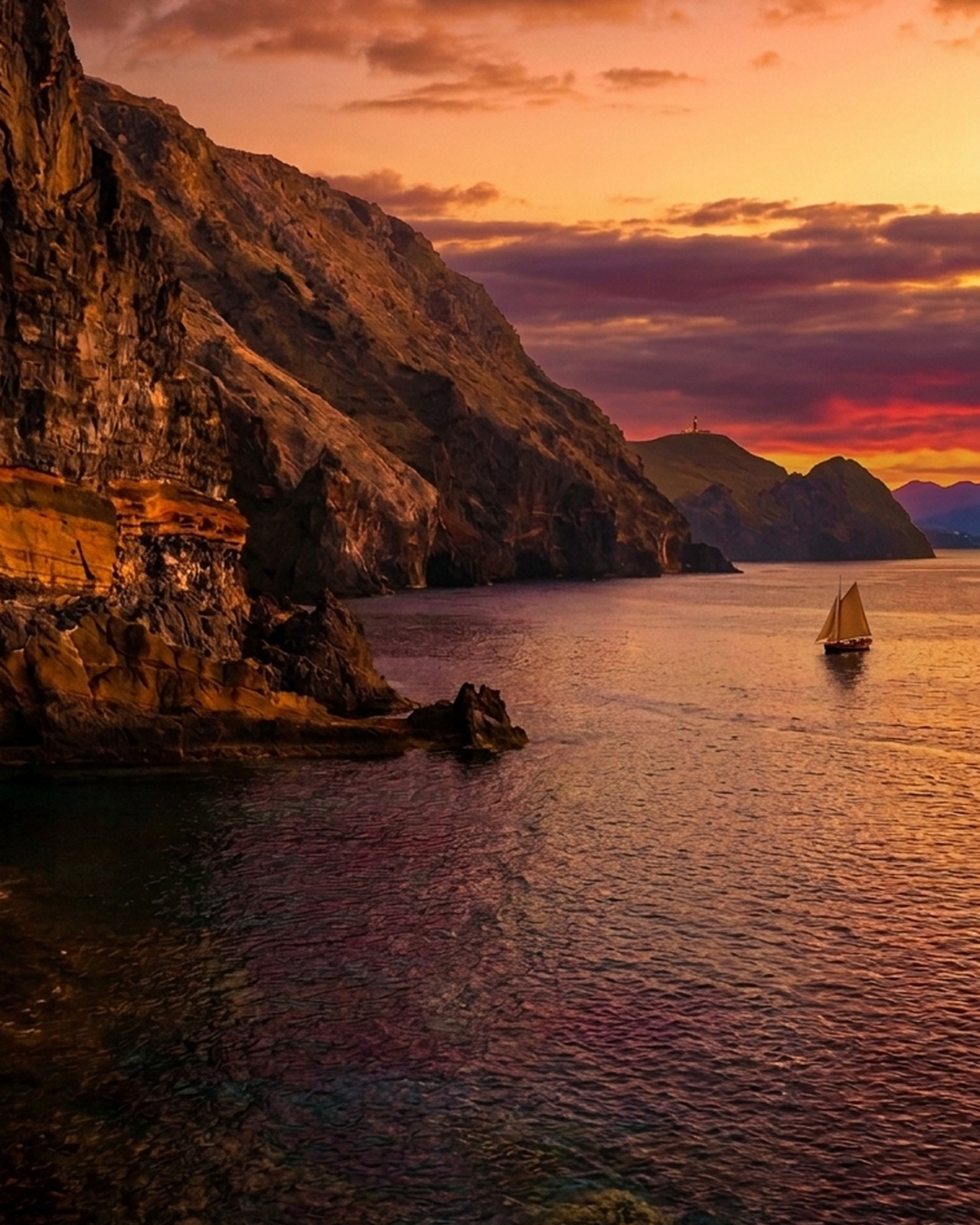
Desertas Islands
The value of difficulty
In a world increasingly designed for access, there remains a part of Madeira that resists, precisely because it is not easy to reach.
These are the places that feel most authentic today.
They demand time, effort and a willingness to accept discomfort, both physical and mental.
It is this very filter that preserves them.
Madeira beyond the tourist circuits is not for everyone.
Which may be exactly why it still feels intact.
It is these places, away from the crowds, that feel more authentic today.
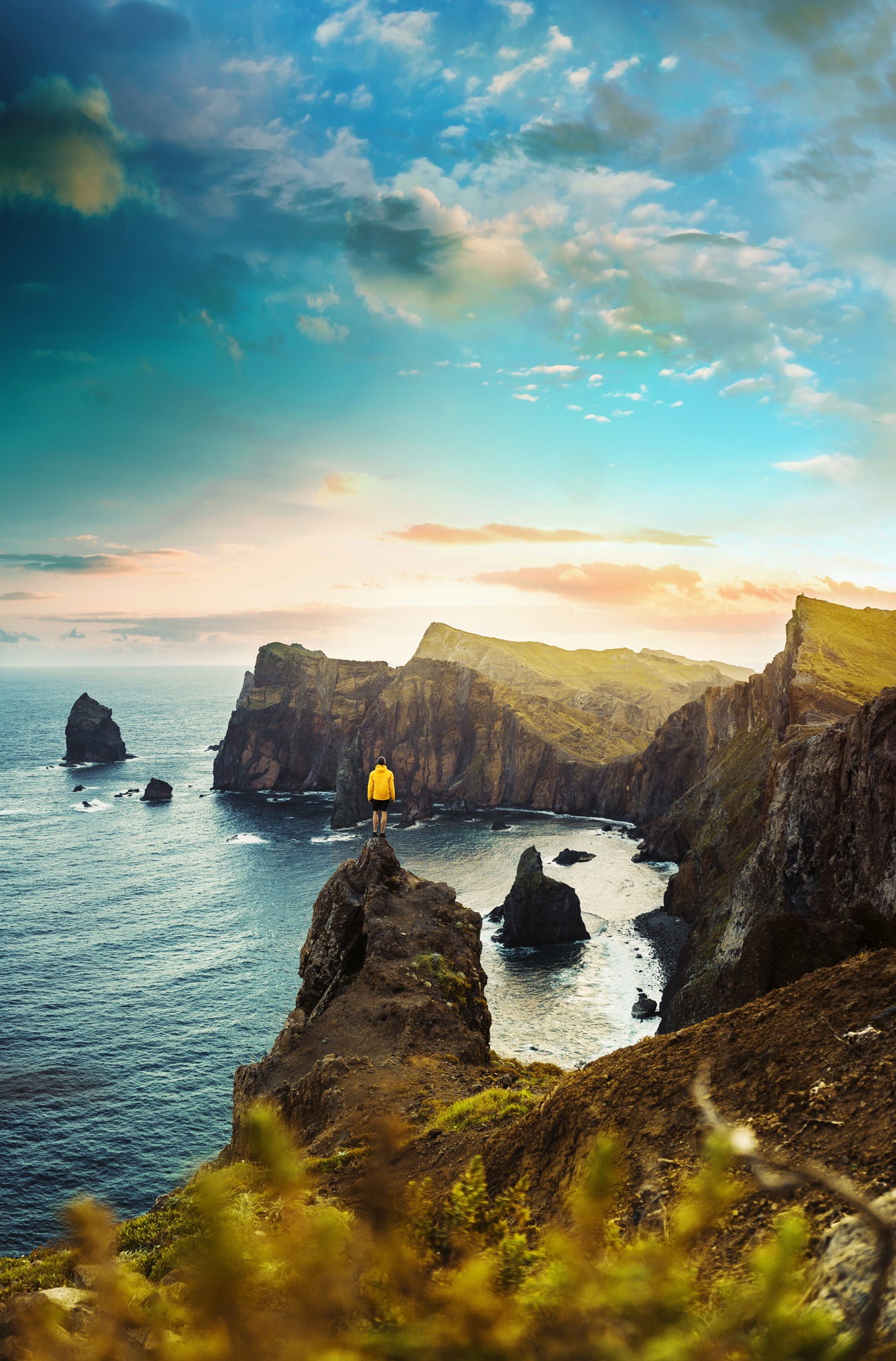
Ponta de São Lourenço
Continue discovering Madeira
Madeira reveals itself slowly, through its landscapes, its cuisine, its wines and the small stories of each place. To go further, explore our guides to where to eat, where to stay, things to do, shopping and nightlife.
And if you are planning your trip, follow the Find Portugal curation — a carefully selected collection of places and experiences to discover Madeira with more time, more depth and a different perspective.
Where to eat
Island flavours, from traditional to contemporary, rooted in local produce and Atlantic identity.
See restaurant recommendations in Madeira
Things to do
Levadas, ocean and mountains — experiences that reveal Madeira at its most authentic.
See Things to do recommendations in Madeira
Where to stay
Hotels, quintas and retreats where silence and landscape shape the experience.
See hotel recommendations in Madeira

Shopping
Madeira wine, local-flavoured chocolates, embroidery and crafts with character and identity.
See shopping recommendations in Madeira
Nightlife
Bars, rooftops and discreet spaces where the night unfolds at a slower pace.